
Reality Testing in the Supplement Aisle
A psychiatrist and neuroscientist explain how “mental clarity” is a marketing category, not a diagnosis. And how the supplement economy profits from that confusion.

In the many years of my career, I have observed and continue to be fascinated with the capacity of commerce to manufacture a “fad” that produces spikes in sales of various products with dubious benefits and undisclosed side effects. Packaged right and advertised correctly, there is money to be made, and the supplement market is a perfect example of this.
What makes supplements uniquely effective as a product category is that they live in the space between medicine and marketing. They borrow the language of science, they promise the comfort of control, and they often avoid the burden of proof. People are not foolish for wanting relief, clarity, energy, or protection from decline. The problem is that this very human desire is routinely exploited.
Following my perennial interest in the topic of reality testing, I want to start by stating something plainly: most supplement advertising is fundamentally built on testimonials. These testimonials are delivered by convincing-sounding people, selected carefully to match the target demographics for the product being peddled. The story comes first. The data, if it exists at all, comes later.
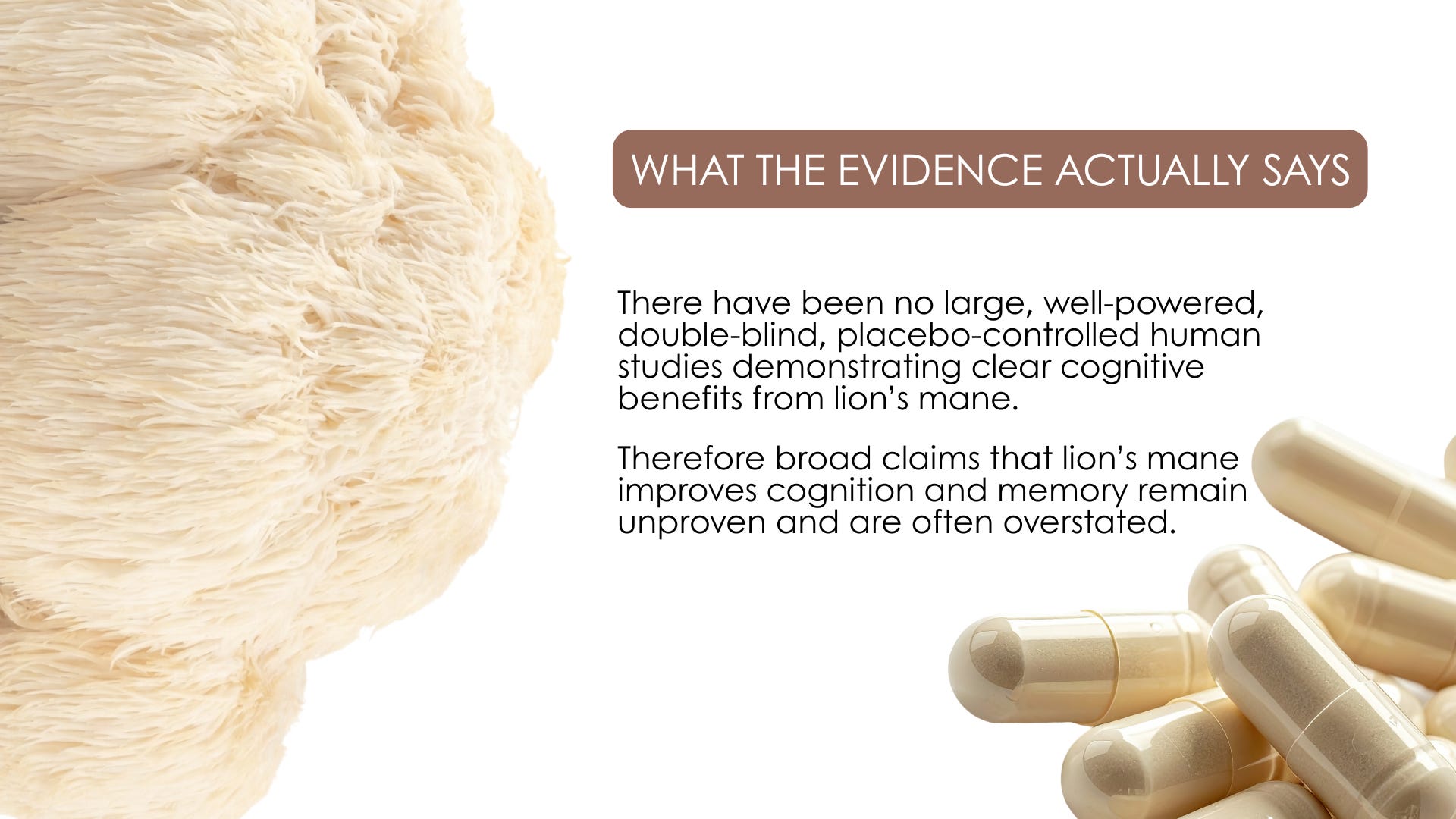
With that in mind, I wanted to comment on the most recent viral infatuation with lion’s mane. It is a type of mushroom that seems to have taken off as the newest “cure-all.” The human need for a cure-all has been exploited since the beginning of time. We do not seem to tire of being taken by snake oil salesmen. Technology and social media networks have provided immense amplification to the unscrupulous.
The advice around lion’s mane often starts with something like (no joke): “There are no human studies evaluating the side effects of lion’s mane available, but it is widely considered safe…” As the brain processes information, the second statement is more recent in its presentation and suggests, by use of the word “widely,” that the fact there are no data available is not important. This is exactly how people get pulled in. “No evidence of harm” is smuggled in as “evidence of safety.”
From there, what follows in many discussions of benefits is a familiar trick: chemical compounds are identified in the supplement, then those same chemicals are described as having some effect in the human body. But no link is established between consuming the supplement and any of the following: availability of the compound, its actual dose, its entry into circulation, and finally its ability to cross into the brain. Therefore, the many statements of health benefits are utterly meaningless.
To understand why these claims collapse so easily, it is important to know that what we call the “blood-brain barrier” is among the most sophisticated protections the brain has. The organism is so protective of the brain that only certain compounds can cross this barrier. In fact, in severe infections such as meningitis and ventriculitis, antibiotics sometimes have to be injected into the spinal fluid because they cannot cross the blood-brain barrier reliably.
That reality should make us skeptical whenever someone casually implies that a supplement will “support cognition,” “repair neurons,” or “optimize the brain,” as if getting something into your stomach guarantees it reaches your neurons.
If this still feels abstract, it helps to look at a concrete example of what “brain supplements” can actually contain. Just in January of this year, one such supplement claiming benefits for the brain, called (of all things) “Body Repair Plan” by a company called “Modern Warrior” and claiming to promote “mental clarity,” was pulled from the market (Walter, 2026). What could possibly be wrong or dangerous with such a magnificently named product by an equally magnificently named company?
It was found to contain undeclared tianeptine, 1,4-DMAA, and aniracetam. Side effects included depression, suicidal ideation, seizures, and in some cases, when interacting with medications, death. A day later, 123Herbals was recalling its Silintan supplement because it contained meloxicam. Meloxicam is an actual prescription medication in the NSAID class. It can cause bleeding, has well-known side effects and interactions, and should be prescribed by a medical professional.
Beyond the risk, nutritional supplements are also a potential drain on your budget. While some can be useful, they need to be considered by a trained medical professional who can evaluate the whole person: gender, age, medical history, medications, risk, and likelihood of benefit. Many supplements live in the “well this can’t harm” territory, but they are simply a waste of money.
It is also worth remembering that many of the “brain” claims rely on a shallow understanding of digestion and metabolism. Various precursors of neurotransmitters, for example, are broken down in the digestion process and do not reach their target enzymes in any meaningful way. Nothing is ever as simple as someone who is trying to sell you something makes it sound.
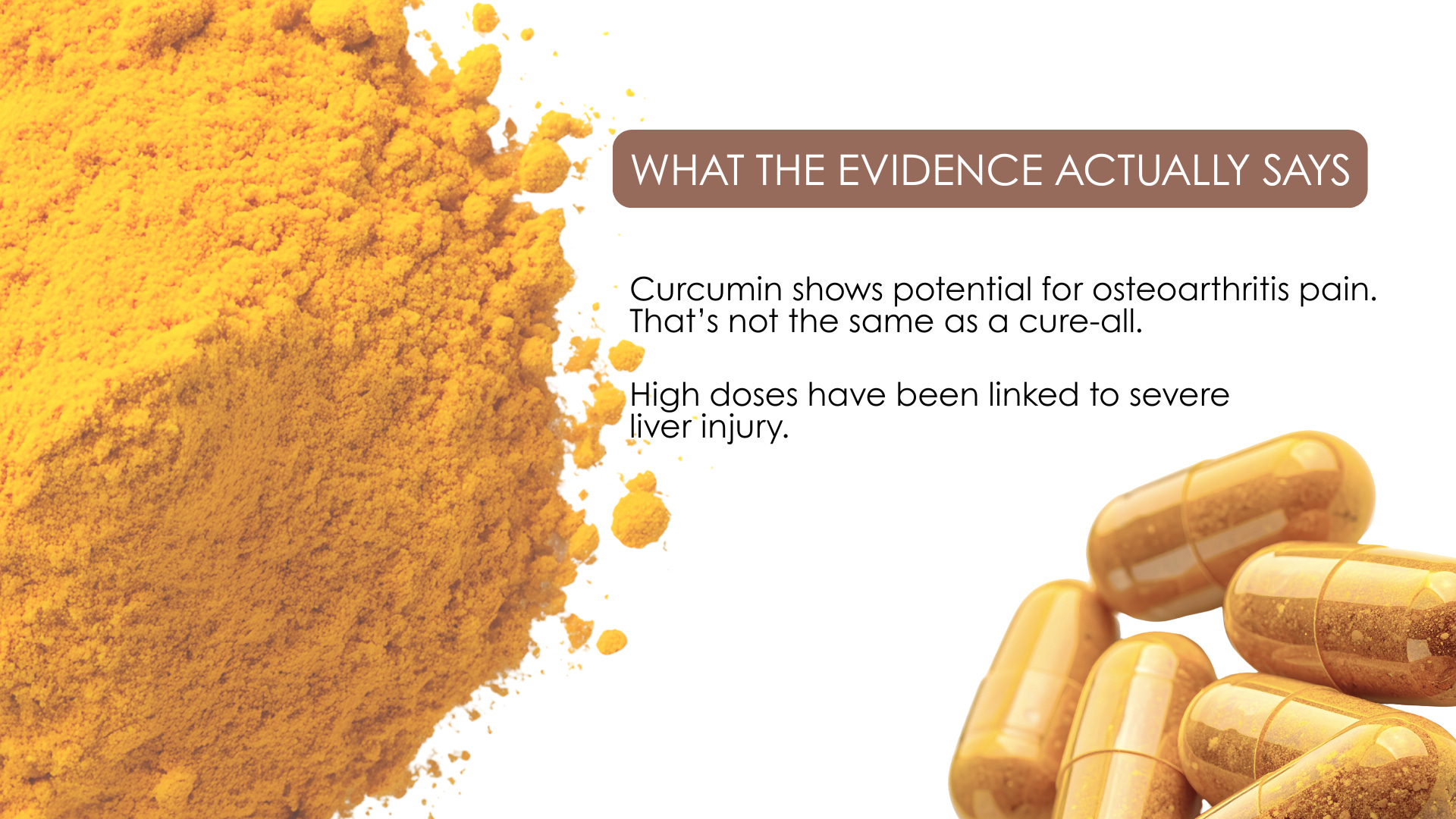
A good illustration of how “natural” gets confused with “safe” is turmeric. Simple little turmeric became a popular cure-all as well. In small amounts used in food, it is fine. Use a large dose and problems start. Its anti-inflammatory effects are also dubious. The best-available statement from the literature looks like this: “Human studies have shown potential for curcumin in managing osteoarthritis pain” (Restivo, 2024). Note the word “potential.” That word makes the claim very weak. It could be helpful, but further literature review yields: “We need more research to establish dose size and frequency.”
Meanwhile, high doses of curcumin can be toxic, including severe liver injury that develops slowly over time (Restivo, 2024). Finally, there is no strong evidence that it is actually helpful for the sprawling list of claimed properties: anti-inflammatory, anticancer, antidiabetic, antidiarrheal, antimicrobial, antiviral, and antioxidant.
And if you want a glimpse of how profitable this is, a quick Amazon search yields over 4,000 results for “turmeric curcumin supplement.” Each bottle is about $20 or more. Rather than buying the supplement and consuming it, it appears wiser to buy stock. A review of the market share yields: “Curcumin market size was estimated at $98.9 million in 2024, and is projected to reach $199.7 million by 2030, growing at a CAGR of 11.9% from 2025 to 2030” (Grand View Research, n.d.).
This is why the old-fashioned “talk to your doctor” actually does matter. Not because physicians are perfect, but because medicine, at its best, forces claims to answer to reality: dose, mechanism, interactions, side effects, and measurable outcomes. Supplements often bypass that accountability entirely. Nine times out of ten, it is best to save your money and protect your brain the boring way: sleep, movement, social connection, and a good, varied diet with enough protein and fiber and as little ultra-processed food as possible. The brain does not need miracle powders. It needs consistency, time, and fewer people trying to sell you certainty.
Sincerely,
Harry Gill, MD, PhD
Dr. Harry Gill is a psychiatrist, neuroscientist, and Medical Director of Embark Behavioral Health. He serves as the Clinical Assistant Professor of Psychiatry at George Washington University.
References
Restivo, J. (2024, March 22). Turmeric benefits: A look at the evidence. Harvard Health Publishing. Retrieved January 24, 2026, from
https://www.health.harvard.edu/staying-healthy/turmeric-benefits-a-look-at-the-evidence
Walter, M. (2026, January 12). ‘Mental clarity’ supplement recalled due to risk of cardiovascular events, suicidal thoughts. Cardiovascular Business. Retrieved January 24, 2026, from
Grand View Research. (n.d.). Curcumin market size, share & trends analysis report. Grand View Research. Retrieved January 24, 2026, from https://www.grandviewresearch.com/industry-analysis/turmeric-extract-curcumin-market
On the Podcast
In this week’s episode of Brain Rot, Dr. Karyne Messina and I explore how reality testing is weakening in the age of screens, AI, and constant digital stimulation. We start from the idea that reality is not a fixed truth, but a construction built from sensory input, memory, and meaning-making. We discuss how the shift from embodied, sensory-based knowing to narrative-driven belief makes us more vulnerable to distortion, especially through “AI slop,” the low-effort, mass-produced content that looks real but is not, and can quietly erode our ability to distinguish plausibility from truth. We also unpack how online trust now runs on familiarity and perceived authority more than evidence, how misinformation can get stored alongside real memories, and how social media’s filtered, curated ideals flatten human complexity, particularly for young people, replacing lived interaction with consumable images. Our takeaway is blunt but hopeful. Reality is a muscle, and the more we live through screens, the more it atrophies, so we have to rebuild it intentionally by putting the phone down, re-engaging our senses, and returning to real-world connection.
Watch here:
In the Press
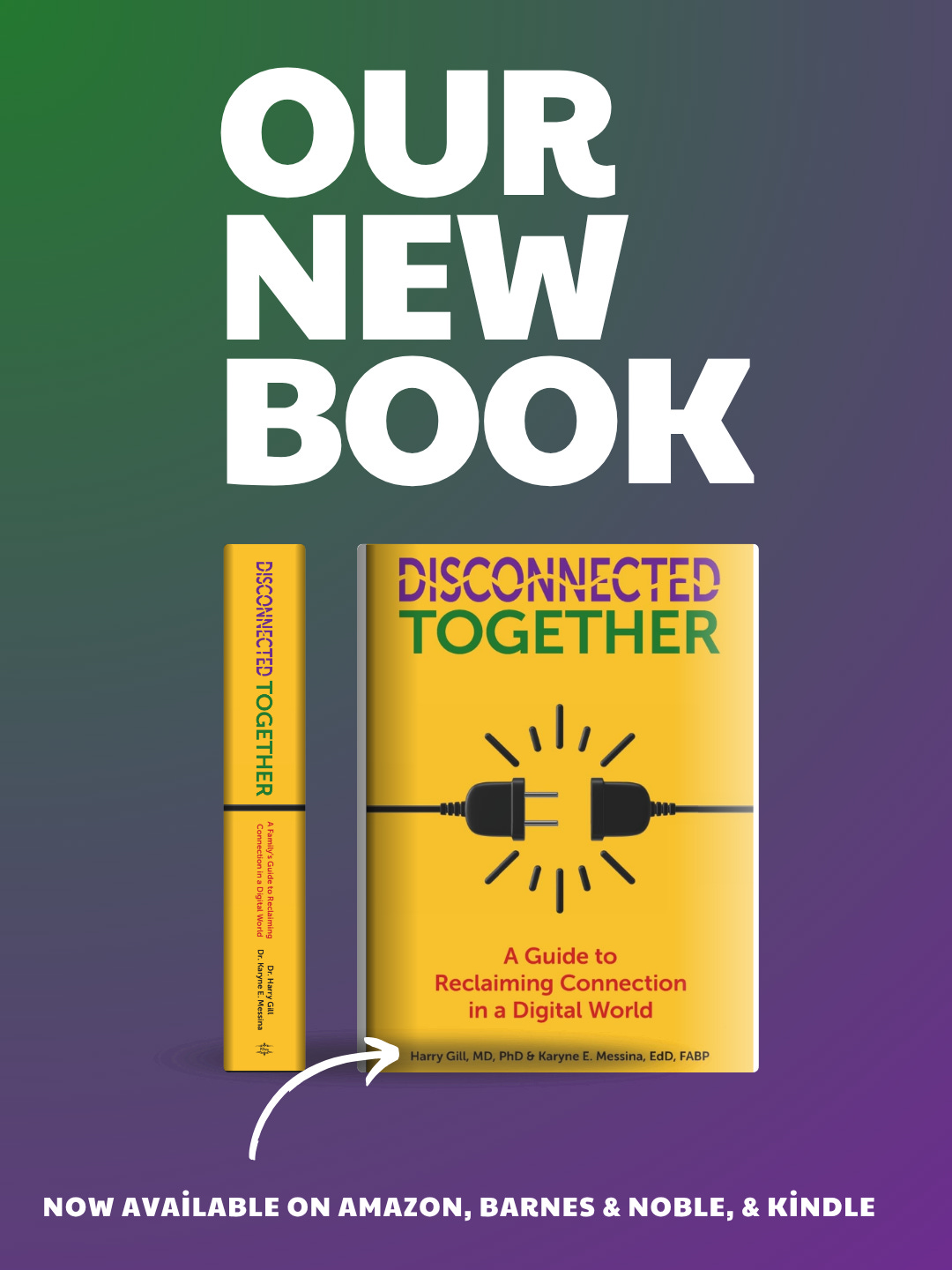
My first book Disconnected Together is officially here. Co - authored with Dr. Karyne Messina, we take you on a journey of human development and offer easy tangible tools for how to combat screens and restore human connection. I hope it offers you something grounding this holiday season! Disconnected Together is now available on all platforms. It is still free as a kindle download on the kindle app.
You can grab a physical copy here: Disconnected Together
Thank you so much for your kind and thoughtful words !
Hey, great read as always. This piece truly aligns with your perenial interest in reality testing, laying bare the architectural flaws in how the supplement economy markets itself. It's a stark reminder of how effectively anecdotal validation can override empirical data, exploiting a fundamental human desire for control over our wellbeing with what often amounts to a black box system.